
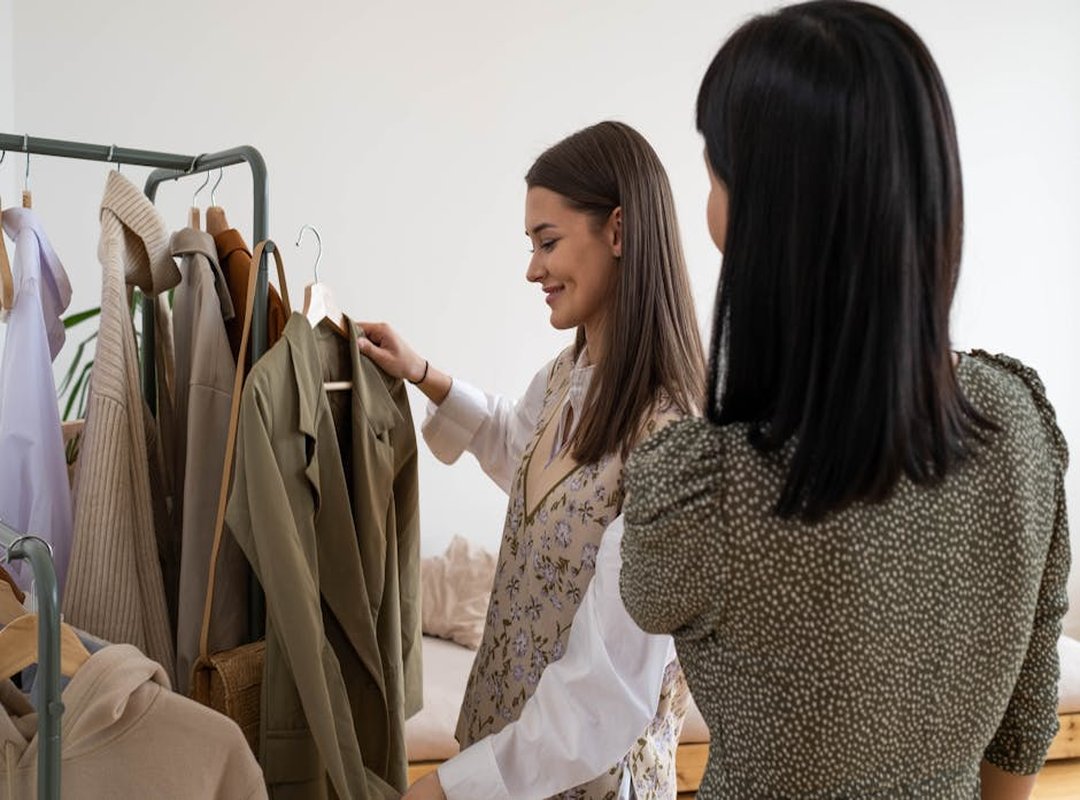
We’ve all been there. You open your closet, and despite the mountain of clothes, nothing seems right. It’s frustrating, right?
The problem isn’t the lack of clothes; it’s the lack of coordination. Random purchases lead to chaos, not style. This article will guide you beyond that mess, toward a wardrobe where every piece works together.
Trust me, I’ve spent years analyzing style principles (not just chasing trends) and discovered what truly works. This isn’t just a collection of wardrobe styling tips; it’s a science-backed approach.
By the end, you’ll have a reliable system for creating stylish, put-together outfits every single day. No more stress, no more guessing. Just a foolproof system for effortless coordination.
Are you ready to transform your wardrobe once and for all?
Color Theory: Your Wardrobe’s Secret Weapon
Understanding color theory is like unlocking a secret code to style success. It’s the foundation of any well-coordinated outfit. Why waste time staring at your closet when you can master the color wheel?
Let’s break it down.
Analogous colors are buddies on the wheel. They sit next to each other, making them naturally harmonious. Think of pairing a navy blazer with a light blue shirt.
Easy, right? Complementary colors, though, are opposites. They create contrast.
Imagine a bold red tie against a crisp green shirt. It’s not for everyone, sure, but it works.
Then we have monochromatic schemes. Different shades of the same color. Picture a head-to-toe grey outfit.
It’s all about depth and variation.
Neutrals deserve a shout-out too. Black, white, grey, beige, navy, camel. These are your wardrobe’s backbone.
They let other colors shine without stealing the show. They’re like a blank canvas. You can layer textures or add pops of color without clashing.
Speaking of pops, let’s talk accents. The 60-30-10 rule is a lifesaver. Use 60% of a dominant color, 30% a secondary, and 10% an accent.
Simple math, huge impact. A red scarf or lively socks can change everything.
Need more wardrobe styling tips? Accessories matter too. Jewelry, in particular, can transform your look.
Want to learn more? This guide will raise your outfit game.
Color theory isn’t just for artists. It’s for anyone who wants to look effortlessly put-together. Why not give it a try?
Proportions and Silhouettes: The Key to Wardrobe Success
I often find myself staring at my closet, wondering why my outfits don’t work. You know the feeling, right? Each piece looks great alone, but together they just feel “off.” It’s all about proportion.
Once I realized that, my styling game changed.
The Rule of Thirds isn’t just for photographers. It’s a fashion lifesaver. Imagine pairing a cropped jacket with high-waisted pants.
This creates a 1/3 to 2/3 proportion (a) changing and flattering look. The half-and-half split? Boring and unflattering.
It’s a simple fix that makes a world of difference.
Then there’s the Volume Balancing Act. You’ve got to pair a voluminous piece with a fitted one. It’s fashion math.
Wide-leg trousers with a fitted bodysuit? Perfect. An oversized sweater with skinny jeans?
Yes, please. These combinations keep your silhouette balanced and stylish. Ignore this at your peril.
Now, defining your waistline is a game changer. The quickest way to look polished is by creating a defined waist. The full tuck and the French tuck (half-tuck) are my go-to moves.
A belt can work wonders over dresses or blazers too. These tricks instantly raise your look.
For more wardrobe styling tips, check out this overview. It’s packed with advice from stylists who know their stuff. They’ll back me up on these points.
Remember, it’s not just about the clothes you wear. It’s how you wear them. Once you master proportions and silhouettes, your wardrobe will never feel “off” again.
Advanced Coordination: Confidently Mixing Textures and Patterns
Ever looked in the mirror and wondered, is this too much? Trust me, you’re not alone. Once you’ve got the basics down, it’s time to push your styling game to the next level by mixing textures and patterns.

This isn’t just about looking good; it’s about telling a story with your clothes.
So, let’s talk textures first. Think of them like flavors in cooking. Pairing silk with denim is like mixing sweet and salty.
You’ve got the smooth glide of silk against the ruggedness of denim. Cashmere and leather? That’s comfort meeting rebellion.
And chunky knit with satin? Think of it as cozy meets elegance. These combinations work because of their contrast: rough with smooth, structured with fluid.
It’s all about balance.
Now, patterns. Here’s where people usually start to panic. But don’t.
I’ve got a formula to make it simple. Rule one: vary the scale. A tiny floral print with a wide stripe creates harmony, not chaos.
Rule two: unify with a common color. This ties different patterns together like a theme in a movie soundtrack. Rule three: treat simple patterns like stripes or polka dots as neutrals.
They’re like the salt of your wardrobe (they) go with everything.
Before you dash out the door, do a quick visual check. Ask yourself, is there one clear focal point? If everything screams, nothing gets heard.
It needs to feel intentional, not like fashion threw up on you.
By the way, if you’re navigating seasonal changes, check out these Seasonal Layering Tips Style. They’ll guide you like a trusted friend through the style maze.
There you have it. Wardrobe styling tips that take you from playing it safe to commanding attention. Are you ready to step up your game?
Because once you start mixing textures and patterns, there’s no going back.
Master Your Wardrobe: The 3-Step Curation Plan
Getting your wardrobe right isn’t just theory (it’s) action. Let’s get tactical. Step one is to identify your core neutrals.
This means choosing 2-3 base colors like black, cream, or navy to anchor your wardrobe. These neutrals are the backbone, perfect for major pieces like coats and trousers. You want them versatile, reliable, and timeless.
Then, let’s talk about step two: your signature accent colors. Choose 2-3 colors that make you feel alive. They should flatter your skin tone and bring a punch to tops, scarves, or those beautiful statement pieces.
Think of them as your wardrobe’s secret spice. A dash here, a sprinkle there, and suddenly you’re not just dressed (you’ve) made art.
Now for step three (the) ‘One In, One Out’ principle. You know those closet orphans? The items that sit unworn, lonely, whispering, “Why don’t you ever wear me?” Here’s how to avoid them: for every new item, it must match at least three existing pieces.
This builds a wardrobe that’s cohesive and fast. It’s like having a wardrobe full of best friends who love hanging out together.
Why does this matter? Because wardrobe styling tips aren’t just about following trends. It’s about personal style, about crafting a wardrobe where each piece has a purpose.
If you follow these steps, you’ll save money but also time. And let’s face it, both are way too precious to waste.
So, are you ready to stop staring at a closet full of clothes with nothing to wear? Then start here. Your future self will thank you.
Open up Effortless Style
We’ve all faced it: the chaos of a disjointed closet. But your search for wardrobe styling tips isn’t just over. It’s been crushed.
You’ve got the tools now. By focusing on color, proportion, and texture, you’re not just making outfits; you’re crafting a look that works for you. No more temporary fixes.
This is real change.
So what are you waiting for? Start today. Take one principle from this guide and apply it to tomorrow’s outfit.
It’s the first step toward a confident, effortless style. You deserve this. You can be that person.
Get started now.
 Jessica Sanfordezora
Ask Jessica Sanfordezora how they got into makeup application techniques and you'll probably get a longer answer than you expected. The short version: Jessica started doing it, got genuinely hooked, and at some point realized they had accumulated enough hard-won knowledge that it would be a waste not to share it. So they started writing.
What makes Jessica worth reading is that they skips the obvious stuff. Nobody needs another surface-level take on Makeup Application Techniques, Expert Insights, Trend Tracker Pro. What readers actually want is the nuance — the part that only becomes clear after you've made a few mistakes and figured out why. That's the territory Jessica operates in. The writing is direct, occasionally blunt, and always built around what's actually true rather than what sounds good in an article. They has little patience for filler, which means they's pieces tend to be denser with real information than the average post on the same subject.
Jessica doesn't write to impress anyone. They writes because they has things to say that they genuinely thinks people should hear. That motivation — basic as it sounds — produces something noticeably different from content written for clicks or word count. Readers pick up on it. The comments on Jessica's work tend to reflect that.
Jessica Sanfordezora
Ask Jessica Sanfordezora how they got into makeup application techniques and you'll probably get a longer answer than you expected. The short version: Jessica started doing it, got genuinely hooked, and at some point realized they had accumulated enough hard-won knowledge that it would be a waste not to share it. So they started writing.
What makes Jessica worth reading is that they skips the obvious stuff. Nobody needs another surface-level take on Makeup Application Techniques, Expert Insights, Trend Tracker Pro. What readers actually want is the nuance — the part that only becomes clear after you've made a few mistakes and figured out why. That's the territory Jessica operates in. The writing is direct, occasionally blunt, and always built around what's actually true rather than what sounds good in an article. They has little patience for filler, which means they's pieces tend to be denser with real information than the average post on the same subject.
Jessica doesn't write to impress anyone. They writes because they has things to say that they genuinely thinks people should hear. That motivation — basic as it sounds — produces something noticeably different from content written for clicks or word count. Readers pick up on it. The comments on Jessica's work tend to reflect that.