

The beauty world moves fast—new ingredients, viral hacks, and must-have products appear daily. But beyond the hype, what’s truly shaping the future of beauty industry? With so many launches and bold claims, it’s harder than ever to know which innovations actually deliver results and which are simply clever marketing. This article cuts through the noise to spotlight the meaningful shifts in skincare science, technology, and makeup artistry that are redefining standards. Drawing on in-depth analysis of cosmetic research and real-world application, you’ll gain a clear understanding of what works, what lasts, and where beauty is genuinely headed next.
The Digital Vanity: How Technology is Personalizing Every Step
Technology has officially moved from your pocket to your powder room. Beauty is now data-driven, hyper-personalized, and increasingly powered by algorithms that know your skin almost as well as you do.
AI and AR Integration
Virtual try-on tools use augmented reality (AR)—a technology that overlays digital images onto the real world—to let you “wear” lipstick or foundation through your phone camera. Meanwhile, AI diagnostics analyze selfies to detect concerns like hyperpigmentation, acne, or fine lines by mapping patterns and color variations. Some skeptics argue these tools can’t replace in-person consultations. Fair point. Lighting and camera quality can skew results. But studies show AI-assisted dermatology tools can achieve accuracy rates comparable to professionals in specific diagnostic categories (Nature, 2020).
Recommendation: Use AI tools as a screening step, not a final verdict. Then cross-check with expert guidance like dermatologists share their top skincare advice for every age (https://nitkafacts.com/dermatologists-share-their-top-skincare-advice-for-every-age/).
Custom-Formulated Beauty
Brands now use quizzes, environmental data, and even humidity levels to create bespoke serums and foundations. Custom formulation means products are blended specifically for your skin profile instead of mass-produced. While some argue it’s just clever marketing (and yes, not all customization is equal), data-backed personalization can improve ingredient compatibility and reduce irritation.
Pro tip: Look for brands that disclose active ingredient percentages.
The Rise of At-Home Devices
LED masks stimulate collagen using specific light wavelengths, microcurrent devices deliver low-level electrical currents to tone facial muscles, and ultrasonic scrubbers use vibration to dislodge debris. Clinical studies support LED red light for collagen stimulation (Journal of Clinical and Aesthetic Dermatology, 2014).
If you invest in one device, choose LED therapy for overall skin health—it’s the most researched. This blend of AI, customization, and devices signals the future of beauty industry: smart, personalized, and increasingly professional-grade at home.
Skincare’s Scientific Leap: The Power of the Microbiome and Bio-Tech
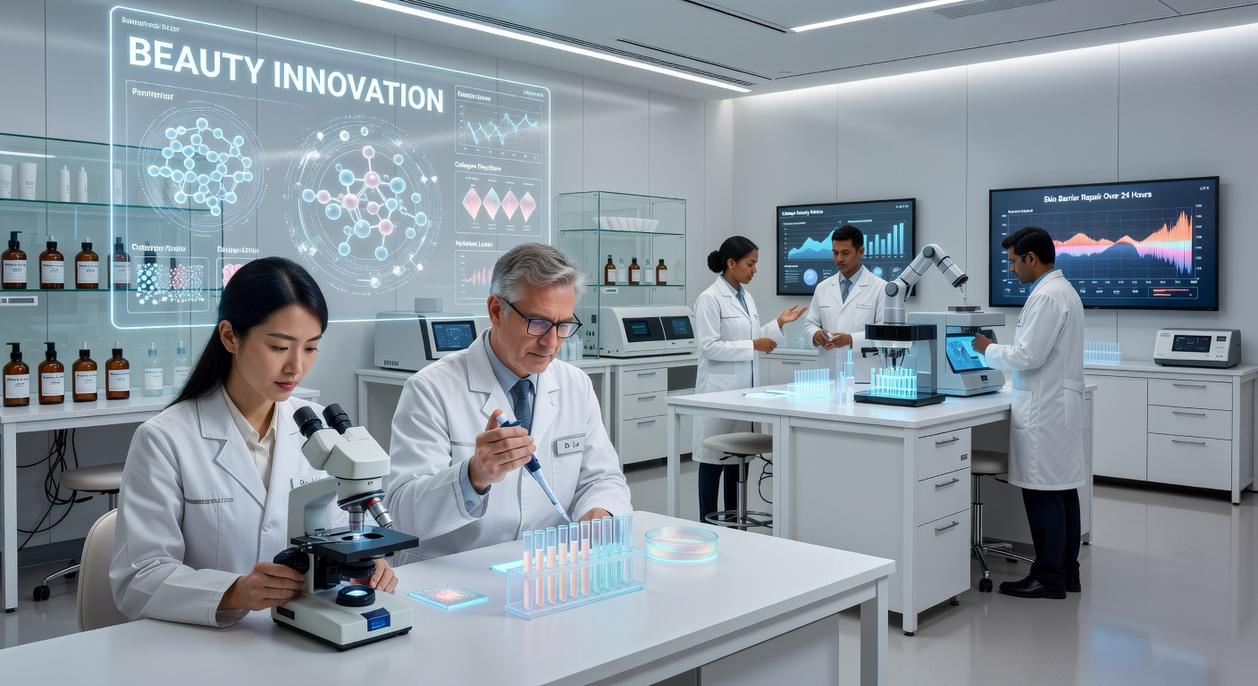
Microbiome-Friendly Formulas: Supporting Your Skin’s Ecosystem
First, let’s define the skin microbiome: it’s the community of bacteria, fungi, and microorganisms living on your skin that help defend against irritation, pollution, and moisture loss. Think of it as your skin’s invisible security team. When harsh cleansers strip everything away (yes, even the “good” stuff), that balance is disrupted.
That’s why brands are turning to prebiotics (nutrients that feed good bacteria), probiotics (beneficial bacteria), and postbiotics (byproducts that support barrier repair). Research published in Dermatology and Therapy (2020) shows microbiome-focused ingredients can strengthen the skin barrier and reduce sensitivity. In other words, less “squeaky clean,” more resilient glow.
Bio-Fermentation and Active Ingredients
Meanwhile, bio-fermentation is elevating ingredient performance. Fermented rice water and ginseng undergo natural breakdown processes that make nutrients smaller and easier to absorb. This can enhance the effectiveness of actives like peptides (short chains of amino acids that support collagen) and hyaluronic acid (a molecule that binds water to keep skin hydrated). Studies in the Journal of Cosmetic Dermatology (2019) suggest fermentation may improve antioxidant activity and penetration.
The ‘Skinimalism’ Movement
At the same time, consumers are embracing “skinimalism”—streamlined routines built around multitaskers like niacinamide (balances oil and brightens) and azelaic acid (targets redness and breakouts). Some argue complex routines deliver better results. However, evidence increasingly shows consistency and barrier health matter more than layering ten steps (your bathroom shelf will thank you).
Ultimately, this science-backed simplicity signals the future of beauty industry innovation: smarter formulas, fewer steps, stronger skin.
Makeup Reimagined: The Fusion of Color and Care
The beauty aisle no longer splits makeup and skincare into separate worlds. The Hybrid Revolution is here, and it’s changing expectations fast. Serum foundations now deliver lightweight coverage plus ingredients like hyaluronic acid (a moisture-binding molecule that helps skin retain hydration), while lip oils condition with peptides as they gloss. Vitamin-infused cream blushes brighten and nourish at once. Some critics argue makeup should simply “cover” and skincare should “treat.” But why choose, when modern formulations can do both?
Texture is evolving too. Consumers want breathable, skin-like finishes that move naturally—think your skin, just more even (no heavy stage-makeup flashbacks). Versatile sticks and balms swipe across:
- Eyes
- Lips
- Cheeks
This minimal, multi-use approach answers the growing demand for streamlined routines.
Inclusivity is now a baseline, not a bonus. Brands are expanding beyond shade ranges to address:
- Hyperpigmentation
- Acne-prone skin
- Sensitive or reactive types
The next question becomes: what will the future of beauty industry prioritize next? Expect biotech ingredients, refillable packaging, and adaptive formulas that respond to your skin’s needs in real time. Pro tip: check ingredient lists before trend lists—performance always outlasts hype.
Conscious beauty used to mean swapping plastic for glass and calling it a day. I made that mistake early on, praising brands without checking their refill systems reduced waste. Lesson learned. Refillable pods, compostable wraps, and packaging-free bars only matter if they cut lifecycle emissions (EPA, 2023). Today’s leaders design for CIRCULARITY, not aesthetics.
“Clean beauty” is another term I misunderstood. It is not chemical-free—everything is a chemical—but transparent, ethically sourced, and free from controversial ingredients like parabens and phthalates (FDA, 2022). Consumers demand INCI lists. Is this the future of beauty industry? Brands that hide details risk losing trust.
Crafting Your Modern Beauty Philosophy
You set out to better understand the shifts redefining beauty, and now you have clarity on the technology, science, and ethics shaping the future of beauty industry. The real challenge isn’t chasing every new launch—it’s cutting through the noise to build a routine that’s personal, effective, and aligned with your values.
By embracing personalized tech and microbiome-supportive skincare, you can create smarter results with less guesswork and more intention.
Don’t let overwhelm stall your progress. Start today: audit your routine and make one conscious upgrade—whether it’s a hybrid product or a more sustainable brand choice—and take control of your beauty evolution.
 Content & Research Specialist
Wayne Littlejohnielo writes the kind of trend tracker pro content that people actually send to each other. Not because it's flashy or controversial, but because it's the sort of thing where you read it and immediately think of three people who need to see it. Wayne has a talent for identifying the questions that a lot of people have but haven't quite figured out how to articulate yet — and then answering them properly.
They covers a lot of ground: Trend Tracker Pro, Glow-Up Styling Tips, Beauty Concepts and Basics, and plenty of adjacent territory that doesn't always get treated with the same seriousness. The consistency across all of it is a certain kind of respect for the reader. Wayne doesn't assume people are stupid, and they doesn't assume they know everything either. They writes for someone who is genuinely trying to figure something out — because that's usually who's actually reading. That assumption shapes everything from how they structures an explanation to how much background they includes before getting to the point.
Beyond the practical stuff, there's something in Wayne's writing that reflects a real investment in the subject — not performed enthusiasm, but the kind of sustained interest that produces insight over time. They has been paying attention to trend tracker pro long enough that they notices things a more casual observer would miss. That depth shows up in the work in ways that are hard to fake.
Content & Research Specialist
Wayne Littlejohnielo writes the kind of trend tracker pro content that people actually send to each other. Not because it's flashy or controversial, but because it's the sort of thing where you read it and immediately think of three people who need to see it. Wayne has a talent for identifying the questions that a lot of people have but haven't quite figured out how to articulate yet — and then answering them properly.
They covers a lot of ground: Trend Tracker Pro, Glow-Up Styling Tips, Beauty Concepts and Basics, and plenty of adjacent territory that doesn't always get treated with the same seriousness. The consistency across all of it is a certain kind of respect for the reader. Wayne doesn't assume people are stupid, and they doesn't assume they know everything either. They writes for someone who is genuinely trying to figure something out — because that's usually who's actually reading. That assumption shapes everything from how they structures an explanation to how much background they includes before getting to the point.
Beyond the practical stuff, there's something in Wayne's writing that reflects a real investment in the subject — not performed enthusiasm, but the kind of sustained interest that produces insight over time. They has been paying attention to trend tracker pro long enough that they notices things a more casual observer would miss. That depth shows up in the work in ways that are hard to fake.