
Struggling to get your eyeshadow to look seamless instead of patchy or harsh? You’re not alone. Many beauty enthusiasts search for clear, science-backed guidance on eye makeup blending techniques that actually work for different eye shapes, skin types, and product formulas. This article is designed to give you exactly that—practical, easy-to-follow methods that help you create smooth transitions, balanced depth, and professional-looking results.
We break down the core principles behind flawless blending, from brush selection and product layering to understanding how pigment interacts with skin texture. Our guidance is rooted in expert beauty insights, proven application methods, and a deep understanding of skincare science—so you’re not just copying steps, you’re learning why they work.
Whether you’re aiming for a soft everyday look or a bold, smoky finish, you’ll find actionable tips to elevate your technique and achieve consistently polished eye makeup results.
From Patchy to Polished: The Secret to Seamless Eyeshadow
Struggling with streaks or harsh lines? The fix isn’t more product—it’s better technique. Professional artists rely on prep, placement, and pressure control to create that soft-focus finish (yes, like a subtle Instagram filter).
- Prime first. A thin layer of primer evens texture so pigment grips smoothly.
- Start light. Build color gradually using eye makeup blending techniques with small circular motions.
- Switch brushes. Fluffy for diffusing edges, dense for packing color.
- Blend edges last. Use a clean brush to soften transitions.
Pro tip: hold your brush near the end for lighter pressure and smoother gradients.
The Essential Blending Toolkit: Why the Right Brush is Everything
First, let’s compare the heavy lifter to the precision player. A fluffy blending brush is your go-to for diffusing color through the crease. Its loosely packed bristles and rounded shape spread pigment in soft, airy layers, creating seamless gradients instead of harsh stripes. Think of it as the “soft focus” filter of your makeup bag. Natural fibers (like goat hair) tend to grip and disperse powder pigments beautifully, while high-quality synthetic fibers offer durability and work well with creams (pro tip: if you use both formulas, choose a versatile synthetic blend).
In contrast, the tapered blending brush narrows at the tip. That pointed shape concentrates color in smaller areas, making it ideal for defined crease work. Fluffy brush vs. tapered brush? One diffuses broadly; the other refines precisely. If the fluffy brush is your paint roller, the tapered brush is your detail brush.
Then there’s the pencil brush. Short, dense, and compact, it’s perfect for smudging liner or placing depth on the outer corner before blending. It anchors eye makeup blending techniques with control.
Finally, brush quality matters. Well-crafted brushes pick up and deposit pigment evenly, preventing patchiness and making blending dramatically easier (yes, quality really does show).
Prepping Your Canvas: The Non-Negotiable First Step for Smoothness
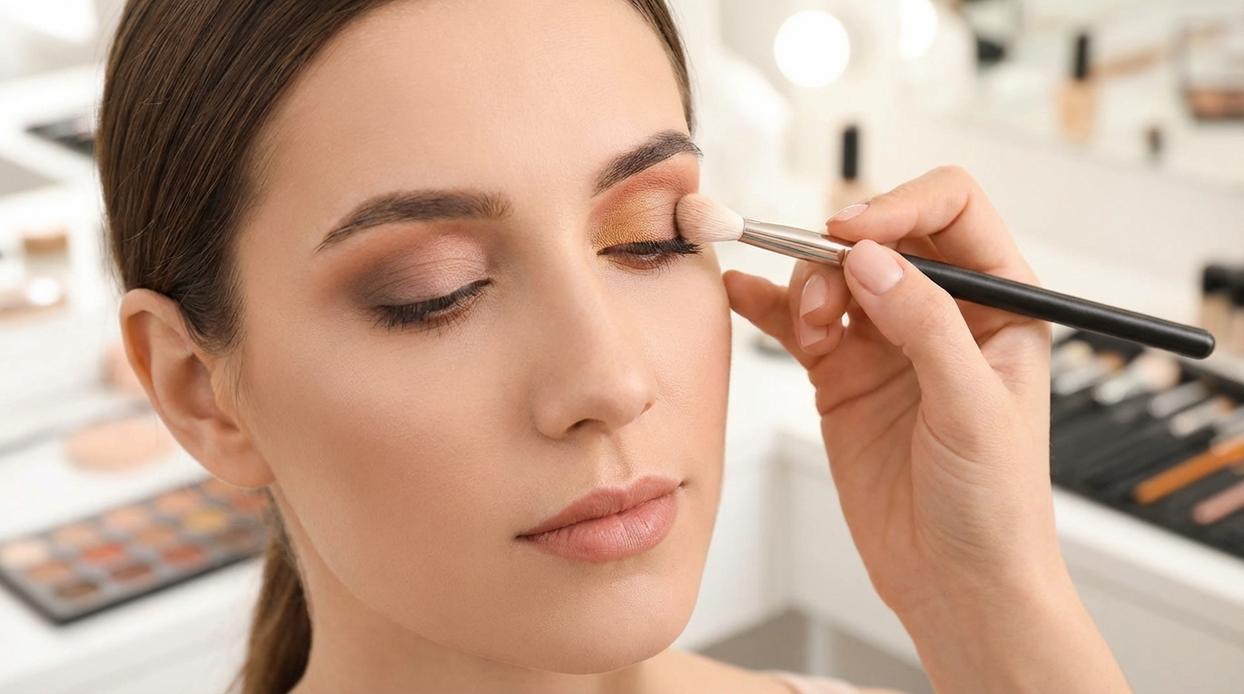
If your shadow creases by lunchtime, primer—not your palette—is usually the culprit. Eyeshadow primer is a lightweight base that creates a smooth, slightly grippy surface so pigment adheres evenly. Think of it like painting a wall: you wouldn’t skip primer unless you enjoy streaks. It prevents creasing, boosts vibrancy, and makes blending far easier (yes, even that stubborn navy shade).
How to apply it correctly:
- Use a pea-sized amount.
- Tap a thin, even layer from lash line to brow bone.
- Blend with your ring finger or a flat synthetic brush.
Pro tip: Too much primer causes slipping—keep it sheer.
Next, set the base with a neutral, skin-tone powder or shadow. This step creates a silky surface so shadows glide during eye makeup blending techniques. The difference is immediate.
Mastering small prep steps here makes the rest of your routine—as with learning how to apply lipstick perfectly and make it last longer—far more effortless.
Core Blending Techniques for a Flawless Gradient
If you’ve ever spent 20 minutes on your eyeshadow only to step back and see harsh stripes instead of a smooth fade, you’re not alone. Blending can feel weirdly elusive—like everyone else got a secret memo you missed. The good news? It’s not talent. It’s technique.
The Transition Shade
First up: the transition shade. This is a neutral color a few shades darker than your skin tone, designed to help other shades fade seamlessly into your complexion. Think of it as the “buffer zone” between bold pigment and bare skin.
Apply it directly into your crease—the natural fold above your eyelid. Without this step, darker shades tend to look patchy or abruptly placed (aka the dreaded “floating color” effect). Some people argue you can skip it if you’re in a rush. Technically, yes. But that’s usually when blending becomes frustrating and uneven.
The ‘Windshield Wiper’ Motion
Now, grab a fluffy brush. Using light pressure, sweep the transition shade back and forth across your crease in a windshield wiper motion. Build slowly. Don’t pack it on all at once.
This back-and-forth movement distributes pigment evenly, creating a soft wash of color. If you’ve ever pressed too hard and ended up with a dark stripe, that’s usually a pressure problem (it happens to the best of us). Keep your grip relaxed.
Small Circular Motions
Next, switch to small circular motions along the outer edges. This diffuses color and softens harsh lines, especially where darker shades meet lighter ones. It’s particularly helpful on the outer corner, where buildup happens fast.
Layering Light to Dark
Here’s the golden rule: layer light to dark. Start with your lightest shade, then gradually add deeper tones in smaller, more concentrated areas. This prevents muddiness—a common issue when everything blends into one undefined blob.
Some argue it’s faster to apply the darkest shade first. Sometimes, yes. But it’s harder to control intensity that way.
The Clean Brush Trick
Finally, take a completely clean fluffy brush and gently go over all edges. No extra product. This step erases visible lines and ties everything together.
Master these eye makeup blending techniques, and suddenly that flawless gradient won’t feel like a mystery anymore.
Patchy shadow usually traces back to an oily or unset base. Some argue it is just cheap pigment, yet even luxury formulas cling unevenly on slick lids. Instead, apply primer and set it with a neutral powder before color.
Meanwhile, muddy results spark debate. Many blame bold shades, but over-blending or mixing warm and cool tones directly is the real culprit. Use light-to-dark layering, clean your brush between families, and revisit core eye makeup blending techniques.
If you have blended too high, do not start over. Take a clean brush with skin-tone powder or concealer and gently erase and refine.
Master Your Blend and Elevate Every Look
You now have the full toolkit—prep, brushes, and precise eye makeup blending techniques—to create seamless results. If patchy, uneven shadow has ever ruined your vibe (we’ve all been there), the fix isn’t buying more palettes. It’s refining your method.
The core principle is simple: gradual layering and the right tool for the job. Use light pressure, build color slowly, and practice the windshield wiper motion for smooth transitions.
- Start with two shades only
- Blend longer than you think
Patience creates polish. Grab your brushes and practice today.
Mastering Flawless Eye Looks That Last
You came here wanting clarity on how to perfect your eye makeup and finally feel confident blending shadows without harsh lines or patchy color. Now you understand how the right tools, proper layering, and strategic color placement work together to elevate your entire look.
The biggest frustration with eye makeup isn’t the products — it’s the blending. Uneven edges, muddy shades, and harsh transitions can make even premium palettes look disappointing. That’s why focusing on eye makeup blending techniques is the true game-changer. When you master blending, every look appears softer, more professional, and effortlessly polished.
But knowing the techniques is only the first step. Practice them intentionally. Start with light layers, use clean brushes between shades, and blend in small circular motions before building intensity. Consistency is what transforms good makeup days into flawless ones.
If you’re tired of eyeshadow that looks streaky or unbalanced, it’s time to refine your approach. Explore more expert-backed beauty guides and step-by-step tutorials designed to simplify complex techniques and help you achieve seamless results every time. Join thousands of beauty enthusiasts who trust our insights to level up their skills — and start creating smoother, perfectly blended eye looks today.