I’ve spent years studying how cities shape the way we see beauty.
You’re tired of the same tourist trap recommendations. You want to understand why Parisian women look effortlessly chic or how Tokyo became a global style capital.
Most travel guides miss the real story. They’ll send you to the Eiffel Tower but won’t tell you about the pharmacy where locals buy their skincare or the neighborhood where a fashion movement was born.
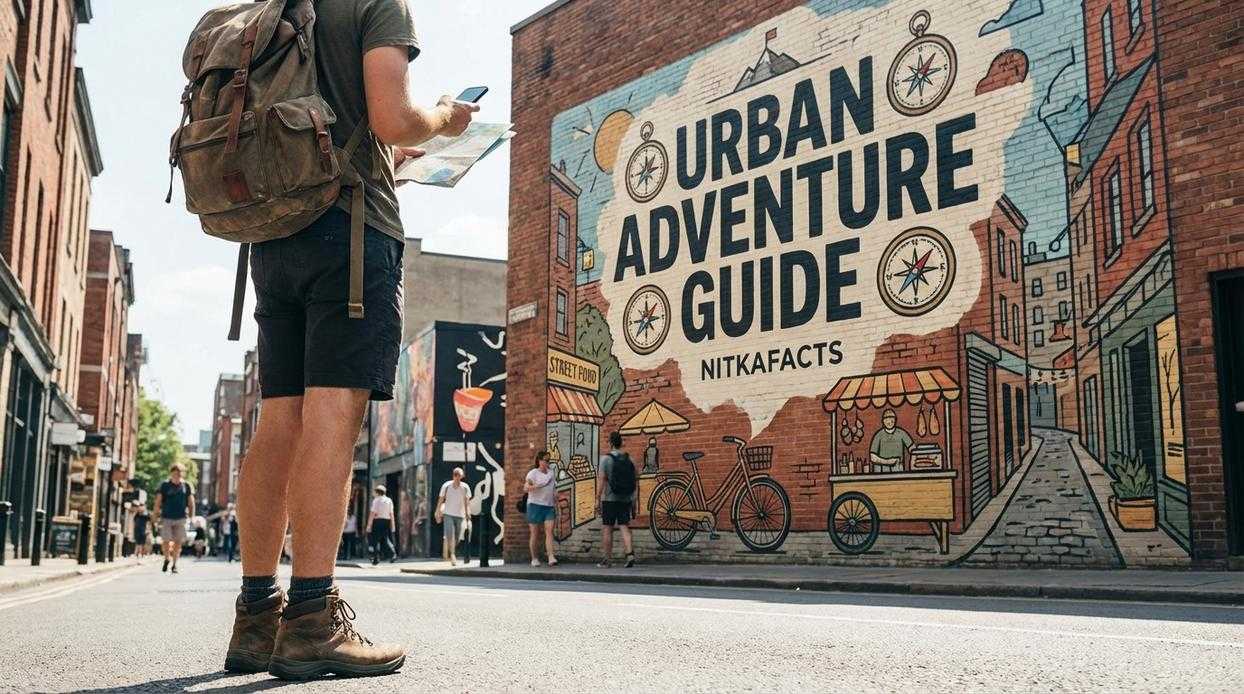
I created this urban adventure guide nitkafacts because cities are living museums of beauty and style. Every street corner has a story about how people express themselves.
We’ve researched how culture, climate, and history create distinct beauty standards in different cities. We’ve walked the neighborhoods where trends start, not where they end up in guidebooks.
This guide shows you what most travelers never see. The subtle details that make a city’s aesthetic unique.
You’ll learn where to find authentic beauty products, which neighborhoods shaped iconic style movements, and how local environment influences everything from skincare routines to fashion choices.
No fluff about must-see monuments. Just the beauty and style secrets that make each city worth exploring.
The Urban Palette: How City Architecture Inspires Beauty
Walk through any city and you’ll see it.
The colors. The textures. The way light hits old stone or new glass.
Most people think architecture and beauty exist in separate worlds. Buildings over here, makeup over there.
But I’ve noticed something different.
The same pigments that architects used centuries ago? They show up in your eyeshadow palette. Those bold Art Deco facades you pass every day? They’re the reason certain makeup trends keep coming back.
Take Florence. The city glows with terracotta rooftops and ochre walls that date back to the Renaissance. Artists ground those same earth pigments for their paintings. And now? Those warm siennas and burnt oranges are the backbone of every classic eyeshadow collection you own.
There’s a reason those shades never go out of style. They’ve been beautiful for 500 years.
Now look at Miami’s Art Deco Historic District. Pastel pinks blend into mint greens and soft lavenders. Those buildings went up in the 1930s, but the color story exploded again in the 1980s. Neon everything. And guess what’s back right now? Those same vibrant pastels are all over runways and makeup counters.
Cities teach us what works. What lasts.
Here’s what most beauty content won’t tell you. You don’t need to follow trends blindly. You can create them yourself by paying attention to where you are.
Next time you travel, pull out your phone. Take photos of buildings that catch your eye. Sample those colors. Match them to your makeup. (I did this in Porto once and ended up with a blue and gold look I still use.)
The urban adventure guide nitkafacts approach is simple. Your city is already showing you what’s beautiful. You just need to look up.
Want to know what to check when choosing an online casino Nitkafacts? Sometimes the best decisions come from understanding patterns around you.
Architecture doesn’t just inspire beauty. It is beauty. And it’s been writing the rulebook longer than any makeup brand.
Skincare Secrets of the Streets: Local Ingredients and Ancient Rituals
You walk past a thousand beauty stores when you travel.
Most of them sell the same stuff you can buy at home. Maybe with a fancy foreign label slapped on.
But what if I told you the real skincare secrets are hiding in plain sight?
I’m talking about the ingredients locals have used for centuries. The rituals that actually work because they’ve been tested by generations, not marketing teams.
Here’s what most travel guides won’t tell you.
Paris isn’t just about luxury brands
Walk into any French pharmacie and you’ll notice something different. These aren’t regular drugstores. They’re where dermatology meets everyday skincare.
Micellar water? That started here in the 1990s when Parisian chemists needed a solution for the city’s harsh tap water. The formula uses tiny micelles (oil molecules) that grab dirt and makeup without stripping your skin.
Now it’s everywhere. But the French versions you find in local pharmacies still hit different because they stick to the original formulations.
Kyoto’s geishas knew what they were doing
Rice bran has been a beauty staple in Japan for over a thousand years. Geishas used komenuka (rice bran powder) to achieve that porcelain skin look we still associate with traditional Japanese beauty.
The science backs it up too. Rice bran contains ferulic acid and vitamin E, which protect against sun damage (something geishas needed since they wore heavy white makeup outdoors).
You can find modern versions in Gion district shops. Look for products with tsubaki oil, which comes from camellia seeds. It’s lightweight but incredibly moisturizing.
Budapest’s thermal baths aren’t just Instagram spots
The Romans built baths here for a reason. The thermal water bubbling up from deep underground is loaded with calcium, magnesium and sulfate.
Studies show these minerals can help with inflammatory skin conditions. The water temperature (around 100°F) opens your pores while the minerals do their work.
Széchenyi Baths has been operating since 1913. You can soak in the same waters that have been treating skin for literally two thousand years.
Want to dig deeper into these beauty traditions? The urban adventure guide nitkafacts breaks down more local skincare secrets you won’t find in typical travel content.
The best part about all of this?
These aren’t trends. They’re traditions that stuck around because they actually work.
A Walk Through Style History: Iconic Fashion Districts

You know how certain streets just feel different?
I’m talking about places where the sidewalk itself seems to pulse with style. Where fashion didn’t just happen but got invented.
These districts changed everything. Not because some marketing team decided they should. But because real people showed up and created something the world had never seen.
Let me take you to two of them.
Savile Row: Where Suits Became Art
Walk down this single street in London and you’re stepping into tailoring history.
Bespoke doesn’t mean what most people think it means. It’s not just expensive or custom. True bespoke means a pattern is created from scratch for your body alone. No template. No shortcuts.
The tailors on Savile Row have been doing this since the 1800s. They dressed Winston Churchill and Cary Grant. Later, they fitted The Beatles and Mick Jagger (who knew rock stars cared about perfect shoulder lines?).
Every suit takes about 50 hours of handwork. That’s one person cutting and stitching fabric to move exactly how you move. The ideas here carry over into Interesting Guides Nitkafacts, which is worth reading next.
This street set the standard for men’s suiting worldwide. When someone says a jacket fits well, they’re usually measuring it against what Savile Row perfected generations ago.
Harajuku: The Street That Wore Its Rebellion
Now let’s jump to Tokyo in the 90s.
Everyone talks about Harajuku like it’s just colorful chaos. But what happened there was more specific than that.
Fashion tribes took over the streets. Groups of young people dressed in complete looks that belonged to distinct subcultures. Lolita fashion brought Victorian doll aesthetics to modern Tokyo. Decora kids covered themselves in layers of accessories until they became walking art installations.
These weren’t costumes for special occasions. This was Sunday style as an urban adventure guide nitkafacts would say.
High fashion designers watched what happened on those streets. Then they put it on runways in Paris and Milan. Harajuku became a testing ground for ideas that were too bold for anywhere else.
Your Mini Walking Tour: Savile Row
Start at number 1 Savile Row where Gieves & Hawkes has been cutting suits since 1771.
Walk to Huntsman at number 11. Their red coat is the one you see in every photo. Pop in and ask to see the cutting room (they sometimes allow quick peeks).
End at number 32 where The Beatles performed their last live concert on the Apple Corps rooftop in 1969. The building’s still there.
Skip the big name flagships for a minute. Duck into the side streets like Clifford Street. You’ll find smaller workshops where one or two tailors still do everything by hand.
Now you might be wondering what this means for your own style. Here’s the thing. These districts prove that real fashion comes from people who commit to an idea completely. Not halfway. Not just for Instagram.
That same principle works whether you’re in London, Tokyo, or figuring out how to find the ideal hotel nitkafacts for your next style pilgrimage.
The question isn’t whether you can visit these places. It’s whether you’re ready to see style as something worth studying seriously.
Practical Beauty for the Urban Explorer
I used to think I could wing it.
Pack my full skincare routine in a suitcase and somehow make it work while hopping between cities. Spoiler: it didn’t work.
My skin freaked out in Tokyo’s humidity. My makeup melted off in Barcelona. And don’t even get me started on what New York’s subway air did to my pores.
Here’s what I learned the hard way.
The Anti-Pollution Shield
You need antioxidants. Not someday. Right now.
I ignored this for years (big mistake). Then I started using products with niacinamide and vitamin C. The difference was obvious within two weeks.
Urban air is full of particulates that sit on your skin and cause inflammation. Antioxidants neutralize that damage before it starts.
Look for serums with these ingredients. Apply them in the morning before sunscreen.
The Minimalist Makeup Kit
Five products. That’s it.
I learned this after lugging around a bag that could double as a small pharmacy. My back hurt and I never used half of it anyway.
Here’s what actually matters: tinted moisturizer with SPF, cream blush (works on lips too), brow gel, mascara, and a lip balm with color.
This setup took me from coffee shops to dinner dates across three continents. No touch-ups needed. This connects directly to what I discuss in How to Find the Ideal Hotel Nitkafacts.
Climate Adaptation
Different cities need different formulas.
I figured this out after my cream foundation turned into an oil slick in Miami. Meanwhile, my gel moisturizer did nothing in Denver’s dry air.
Humid cities? Go gel-based. Your skin doesn’t need extra moisture when the air is already doing the work.
Dry climates? Switch to cream formulas. Your skin will thank you.
Check the urban adventure guide nitkafacts before you travel. Knowing what to expect saves your skin and your sanity.
Your Next Adventure is a Beauty Story
I believe cities reveal themselves in unexpected ways.
Most travel guides send you to the same spots everyone else visits. You take the photos and check the boxes but something feels missing.
What if you explored differently?
When you look at a city through its beauty culture, everything changes. The local makeup styles tell you about climate and tradition. The ingredients in neighborhood shops reveal what grows nearby and what people value. Street style shows you how residents express themselves when nobody’s watching.
This is how you connect with a place on a deeper level.
You came here because you wanted more than surface-level tourism. Now you have a framework that combines your love of aesthetics with genuine exploration.
The tired tourist trails don’t have to be your path anymore.
By focusing on colors, ingredients, and personal style, you see the real character of any city you visit. You find stories that guidebooks miss.
Find Your City’s Beauty Secret
Here’s your challenge for the next trip: discover one local beauty secret or style story that tourists never see.
Skip the landmarks for an afternoon. Walk into the neighborhood beauty supply store. Notice what products line the shelves. Watch how people style themselves on their daily commute.
That’s where you’ll find the true soul of the city.
 Founder & Creative Director
There is a specific skill involved in explaining something clearly — one that is completely separate from actually knowing the subject. Selvian Elthros has both. They has spent years working with expert insights in a hands-on capacity, and an equal amount of time figuring out how to translate that experience into writing that people with different backgrounds can actually absorb and use.
Selvian tends to approach complex subjects — Expert Insights, Beauty Concepts and Basics, Nitka Skincare Science being good examples — by starting with what the reader already knows, then building outward from there rather than dropping them in the deep end. It sounds like a small thing. In practice it makes a significant difference in whether someone finishes the article or abandons it halfway through. They is also good at knowing when to stop — a surprisingly underrated skill. Some writers bury useful information under so many caveats and qualifications that the point disappears. Selvian knows where the point is and gets there without too many detours.
The practical effect of all this is that people who read Selvian's work tend to come away actually capable of doing something with it. Not just vaguely informed — actually capable. For a writer working in expert insights, that is probably the best possible outcome, and it's the standard Selvian holds they's own work to.
Founder & Creative Director
There is a specific skill involved in explaining something clearly — one that is completely separate from actually knowing the subject. Selvian Elthros has both. They has spent years working with expert insights in a hands-on capacity, and an equal amount of time figuring out how to translate that experience into writing that people with different backgrounds can actually absorb and use.
Selvian tends to approach complex subjects — Expert Insights, Beauty Concepts and Basics, Nitka Skincare Science being good examples — by starting with what the reader already knows, then building outward from there rather than dropping them in the deep end. It sounds like a small thing. In practice it makes a significant difference in whether someone finishes the article or abandons it halfway through. They is also good at knowing when to stop — a surprisingly underrated skill. Some writers bury useful information under so many caveats and qualifications that the point disappears. Selvian knows where the point is and gets there without too many detours.
The practical effect of all this is that people who read Selvian's work tend to come away actually capable of doing something with it. Not just vaguely informed — actually capable. For a writer working in expert insights, that is probably the best possible outcome, and it's the standard Selvian holds they's own work to.